

If you are planning a high-end kitchen remodel, choosing a natural stone countertop is the ultimate design decision.
Unlike mass-produced engineered surfaces, natural slabs bring organic art directly into your home.
Let us look at how these authentic materials compare to the alternatives in 2026.
Quick Takeaways
- Natural stone offers unmatched heat resistance and visual uniqueness compared to engineered quartz.
- Quartzite combines the elegant, soft veining of marble with the extreme durability of granite.
- Proper fabrication and vein matching are essential for high-end waterfall edge installations.
- 1. Elevate Your Kitchen: Why Natural Stone Offers Unrivaled Uniqueness
- 2. Natural Stone vs. Quartz: Understanding the Distinctive Difference
- 3. Quartzite: The Ultimate Choice for a Show-Stopping Kitchen Island
- 4. Beyond Quartzite: Exploring Other Unique Stone Options
- 5. Designing with Drama: Natural Stone Waterfall Edge Islands
- 6. Investing in Uniqueness: Understanding Real-World Costs
- 7. Industry Standards and Trusted Resources
- 8. Key Takeaways for High-End Homeowners
- 9. Practical Verdict: Selecting Your Perfect Surface
- 10. Frequently Asked Questions
Elevate Your Kitchen: Why Natural Stone Offers Unrivaled Uniqueness
Every luxury home deserves a distinctive center of gravity.
A custom natural stone countertop provides an immediate focal point that no synthetic material can replicate.
These gorgeous slabs are 100 percent organic, quarried directly from deep within the earth.
Intense geological heat and pressure create striking mineral patterns over millions of years.
Because of this chaotic natural process, no two pieces are identical.
When you install a natural stone countertop, you own a piece of Earth’s history.
Many homeowners grow tired of the uniform, repetitive patterns seen in modern housing developments.
They crave something authentic that tells a unique visual story in their kitchen.
Choosing a unique stone slab kitchen design elevates your property value and interior aesthetic.
Buyers easily recognize the premium craftsmanship and organic warmth of genuine stone.
From deep granites to soft, luminous marbles, the aesthetic spectrum is incredibly vast.
There is an organic texture to match every high-end design palette perfectly.
Natural Stone vs. Quartz: Understanding the Distinctive Difference
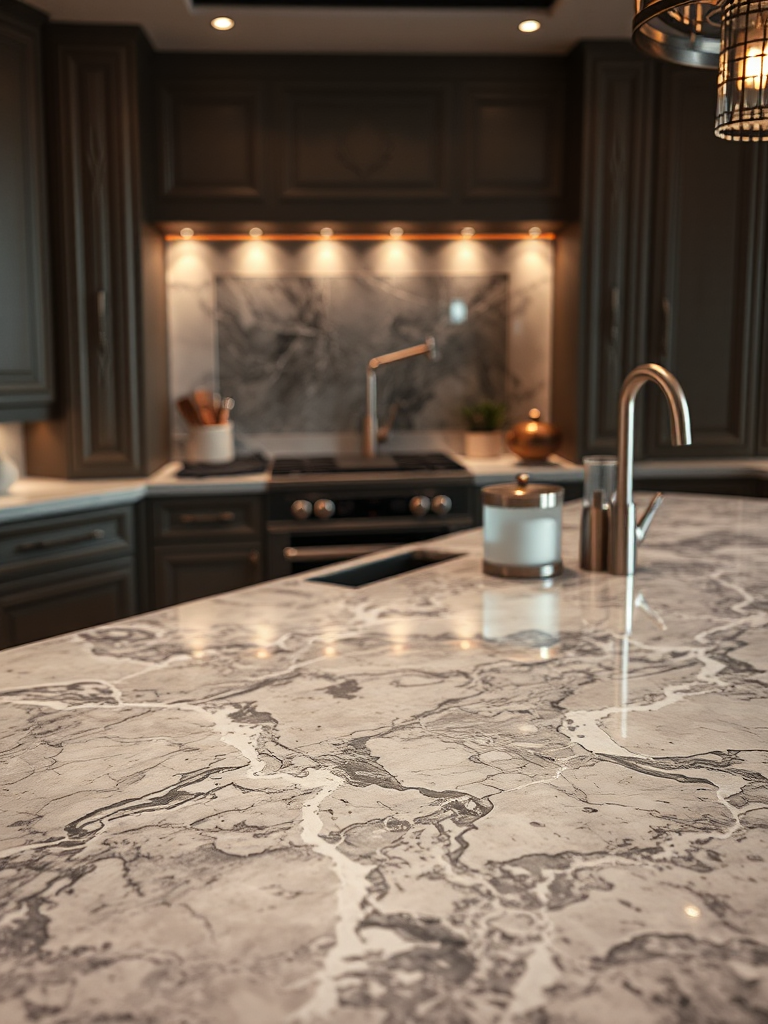
Selecting the right work surface often comes down to natural stone vs quartz.
Both materials have loyal fans, but they serve completely different design philosophies.
Engineered quartz offers predictability and incredibly simple daily maintenance.
However, it lacks the depth, soul, and unique character of a natural stone countertop.
Selecting a natural stone countertop means embracing slight natural imperfections that add character.
Compared with quartz, natural stone varies beautifully in pattern, and while it requires periodic sealing to lock out moisture and resist tough oil stains, the process is incredibly easy with modern, long-lasting spray formulas.
Yet, it rewards you with unmatched heat resistance and a gorgeous natural patina.
Let us look closely at how these materials handle thermal stress in a busy kitchen.
Real stones like granite or quartzite shrug off high temperatures with ease.
Engineered stone is heat resistant, though perhaps not as much as natural stone.
You can place a hot pot directly on your granite or quartzite.
In contrast, placing hot pans on quartz can melt the resin binding agents.
To protect these engineered surfaces from permanent discoloration and heat damage, using a durable silicone trivet or hot pad is essential since they absorb thermal stress effortlessly.
Protecting your kitchen investment is easy if you use a protective countertop mat.
It shields the surface from scratches, heavy impacts, and thermal shock.
If you love cooking with modern, energy-efficient appliances, consider upgrading to an advanced induction cooktop, which offers rapid heat-up times and sleek, touch-sensitive glass surfaces.
While engineered quartz remains static forever, natural stone ages gracefully.
It develops a subtle patina that tells the story of your culinary lifestyle.
Quartzite: The Ultimate Choice for a Show-Stopping Kitchen Island
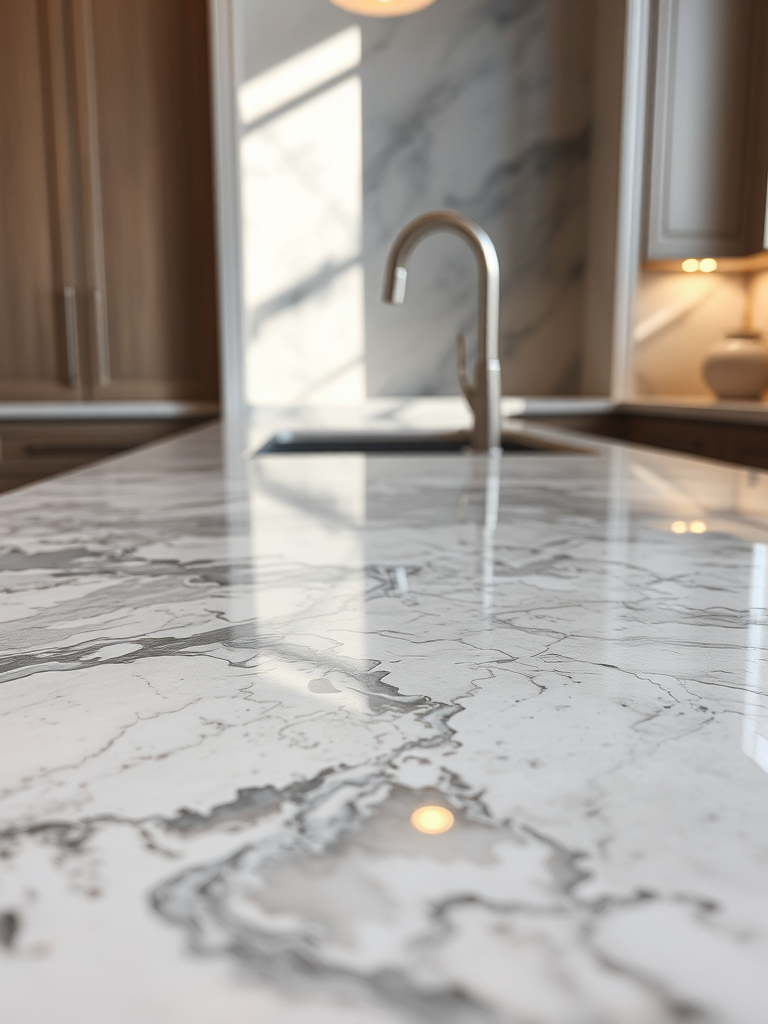
If you want a striking focal point, consider a quartzite kitchen island.
This material has quickly become the darling of luxury interior designers.
Quartzite is a 100 percent natural metamorphic rock quarried from the earth.
It is celebrated globally for its unique veining and incredible durability.
Sandstone undergoes intense tectonic heat and pressure to form this ultra-hard material.
The result is a stone that outperforms almost every other option.
Quartzite has a similar look to many marble stones, with gorgeous natural beauty.
This makes quartzite a brilliant substitute for anyone seeking a durable, high-end natural stone countertop look.
Pair this with a durability factor similar to granite.
You get a stone that stands up to heat and resists scratches.
Building a unique stone slab kitchen around a central quartzite island creates an artistic statement.
The dramatic, flowing veins naturally draw the eye in open-concept living spaces.
However, fabricating quartzite is a highly demanding, specialized process.
The stone is so hard that it requires specialized diamond-tipped cutting tools.
Beyond Quartzite: Exploring Other Unique Stone Options
The world of premium design extends far beyond a single natural stone countertop category.
For instance, we are seeing a major granite countertop comeback in luxury homes.
Designers are moving away from boring, speckled builder-grade options.
Modern granite choices feature high-contrast, swirling patterns that look like abstract landscape paintings.
This classic material is highly prized for its incredible durability and resistance.
If you want a marble alternative countertop, soapstone is an incredible option.
Some homeowners prefer a dark, moody natural stone countertop like soapstone.
Soapstone is soft to the touch but completely non-porous and low-maintenance.
It does not stain, resists acids completely, and handles hot pans effortlessly.
Other stunning alternatives include limestone, slate, and natural sandstone.
Each option provides a distinct texture and color profile for custom home designs.
True marble remains the absolute gold standard for classic luxury homes.
However, it requires a commitment to careful maintenance and accepting natural character marks.
Designing with Drama: Natural Stone Waterfall Edge Islands
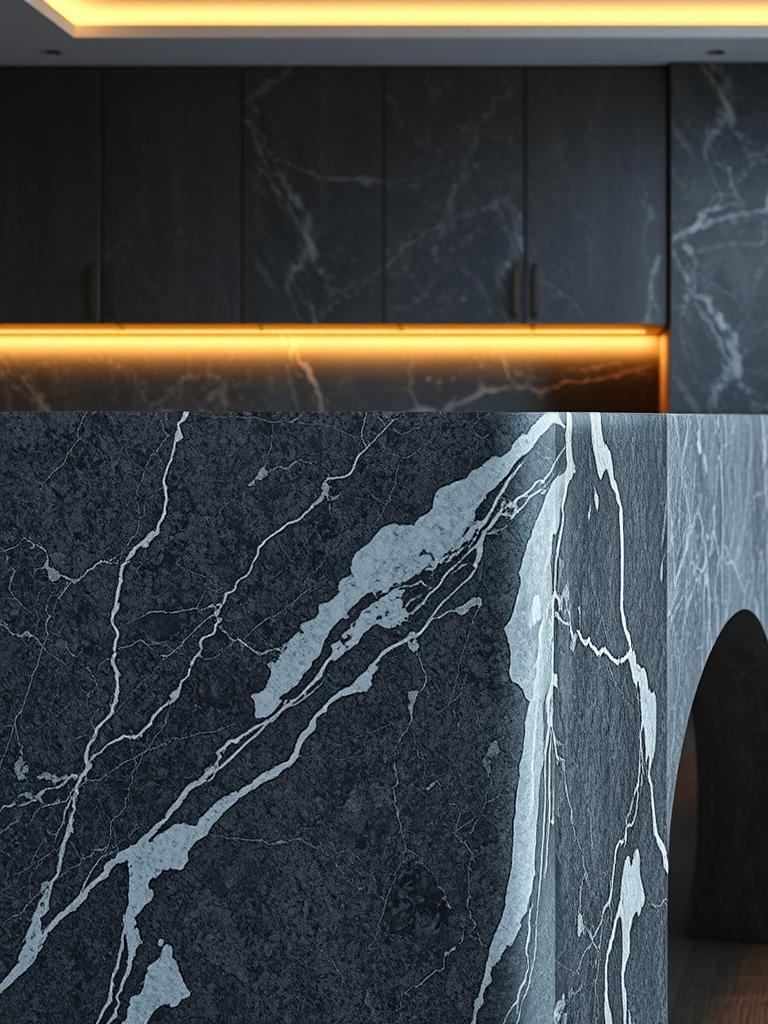
Planning a stone island waterfall edge is another way to elevate a natural stone countertop installation.
This design extends the stone vertically all the way to the kitchen floor.
The visual impact of a continuous stone flow is absolutely breathtaking.
It transforms your kitchen island into a sculptural masterpiece of modern design.
It showcases the complex patterns of your natural stone countertop on two distinct planes.
However, executing this look with real geological slabs is highly challenging.
The pattern must match precisely where the vertical and horizontal planes meet.
Quartz products work well for waterfall countertops because the pattern is predictable.
Yet, natural materials are far more striking when executed correctly.
Natural stones like granite, quartzite, or marble demand incredibly careful slab selection.
Fabricators must mirror-match the veins to create a flawless transition.
This meticulous process requires buying consecutive slabs from the same quarry lot.
It adds to the overall material waste and fabrication labor costs.
If done poorly, misaligned veins will ruin the premium look immediately.
Choosing an experienced, high-end stone fabricator is essential for this design.
Investing in Uniqueness: Understanding Real-World Costs
Calculating your natural stone countertop cost involves several distinct variables.
You must factor in material rarity, fabrication labor, and slab thickness.
A typical natural stone countertop cost ranges between $40 and $120 per square foot installed.
Rarity and origin are the primary price drivers for exotic slabs.
Let us break down the averages by material type in the industry.
Granite averages $40 to $100, while marble runs from $60 to $120.
High-grade quartzite typically costs between $55 and $75 per square foot.
Premium soapstone is highly exclusive, often starting at $120 or more.
In comparison, engineered quartz falls into a similar $50 to $120 range.
While prices are similar, quartz cannot offer a truly one of a kind countertop.
Buying a premium slab is an investment in your home’s equity.
High-end buyers recognize the difference between synthetic surfaces and genuine earth-made materials.
| Material Type | Average Cost (per sq. ft. installed) | Uniqueness Rating | Heat Resistance |
|---|---|---|---|
| Granite | $40 – $100 | High | Excellent |
| Marble | $60 – $120 | Exceptional | High (stains easily) |
| Quartzite | $55 – $75 | Exceptional | Excellent |
| Soapstone | $120+ | High | Outstanding |
| Engineered Quartz | $50 – $120 | Low (uniform) | Moderate (resin melts) |
Industry Standards and Trusted Resources
Understanding stone classifications helps you make an informed decision.
The Natural Stone Institute provides authoritative guidelines on material testing and installation standards.
When planning a luxury kitchen layout, professional design advice is invaluable.
Experts at Architectural Digest emphasize the visual impact of natural surfaces in modern architecture.
You should also research the physical durability of different mineral compositions.
The geological testing data compiled by the U.S. Geological Survey explains how different minerals form and react.
Finally, consider how kitchen investments affect your overall home resale value.
Real estate market reports from Realtor.com show that premium natural stone finishes consistently attract serious buyers.
Key Takeaways for High-End Homeowners
- Organic Beauty: Every single slab of natural stone is entirely unique, displaying gorgeous variations that synthetic products cannot replicate.
- Extreme Heat Resistance: Natural stone easily handles hot pans without requiring protective mats, unlike resin-filled engineered quartz.
- Quartzite Advantage: Quartzite delivers the classic, high-end look of marble with the scratch-resistant durability of granite.
- Waterfall Complexities: Executing a waterfall edge in natural stone requires meticulous vein matching and consecutive slab purchasing.
- Smart Investment: While costs are comparable to quartz, natural stone adds a distinct sense of organic luxury that boosts home resale value.
Practical Verdict: Selecting Your Perfect Surface
In the end, choosing a natural stone countertop is a commitment to authentic beauty.
If you value individuality, no engineered material can match its organic soul.
Homeowners who want a maintenance-free utility surface might prefer quartz.
However, design-conscious buyers will always choose a one of a kind countertop.
Take your time visiting local stone yards to view complete slabs in person.
Never choose your kitchen’s centerpiece from a tiny two-inch sample.
If you want your kitchen to stand out, a natural stone countertop is the ultimate choice.
Ensure your budget covers both premium materials and elite fabrication services.
This balance guarantees your kitchen remains breathtaking for decades to come.
Frequently Asked Questions
Does a natural stone countertop require daily sealing?
No, a natural stone countertop does not require daily sealing. Most stone types only need to be sealed once or twice a year, which is a simple wipe-on, wipe-off process.
Is quartzite better than engineered quartz?
Quartzite is a 100 percent natural stone that offers far better heat resistance and unique veining, whereas engineered quartz is a man-made product containing polymer resins that can melt under high heat.
Can I put hot pans directly on a natural stone countertop?
Yes, you can place hot pans directly on a granite or quartzite natural stone countertop without worrying about melting or scorching. However, using a trivet is still recommended for delicate marbles to avoid thermal shock.
What is the most durable marble alternative countertop?
Quartzite is widely considered the best marble alternative because it features the soft, elegant veining of marble but boasts the physical strength and scratch resistance of granite.
How do I clean my natural stone countertop safely?
To clean your natural stone countertop, use a mild dish soap and warm water or a specialized pH-neutral stone cleaner. Avoid harsh acidic cleaners like vinegar or lemon juice, which can etch the surface.