

Buying a robotic lawn mower is the ultimate way to escape the weekly chore of pushing heavy equipment around your yard.
However, finding the right smart lawn machine is often filled with unexpected frustrations, from complex wire-laying setups to poor satellite connectivity.
This practical guide cuts through the marketing hype to help you choose the ideal system for your home.
Quick Takeaways
- Boundary-free models offer superior flexibility but require a clear, unobstructed view of the sky to function reliably.
- Budget-friendly options still rely on physical perimeter wires, which take time to install unless you use a specialized burying tool that makes wire placement fast, deep, and secure against garden shears.
- Smart app integration and multi-zone mapping are essential features if your yard has separated grass sections or pathways.
- The Rise of Automated Lawn Care: Why Go Robotic?
- Navigating the Price Landscape: What Your Investment Buys You
- The Wire-Free Revolution: Exploring Boundary-Wire Free Mowers
- Brand Showdown: Husqvarna Automower and Its Top Competitors
- Smart Features That Matter: GPS, Self-Charging, and App Control
- Troubleshooting Common Robotic Mower Problems
- Top Picks for 2025/2026: The Best Robotic Mowers for Every Need
- Practical Verdict & Buying Advice
The Rise of Automated Lawn Care: Why Go Robotic?
Lawn care has historically demanded hours of sweaty, manual labor every single week of the growing season.
With a dedicated robotic lawn mower handling the labor, your lawn stays consistently manicured without your direct physical intervention.
Traditional gas mowers emit significant noise and exhaust fumes directly into your local neighborhood air.
An automated lawn care robot operates silently, using battery power to trim your grass while you sleep.
However, choosing a robotic lawn mower requires understanding how these machines differ from your old push mower.
Instead of cutting long grass once a week, these smart machines cut a tiny fraction of an inch daily.
These micro-clippings fall straight back into the soil as a natural, nutrient-rich fertilizer.
If you transition your yard to native plant landscaping, you can minimize the total grass area your machine needs to manage.
Modern robotic lawn mower models use advanced collision sensors to avoid toys, pets, and garden furniture.
This automated approach prevents the lawn from ever looking overgrown, giving you a perpetually neat yard.
Navigating the Price Landscape: What Your Investment Buys You
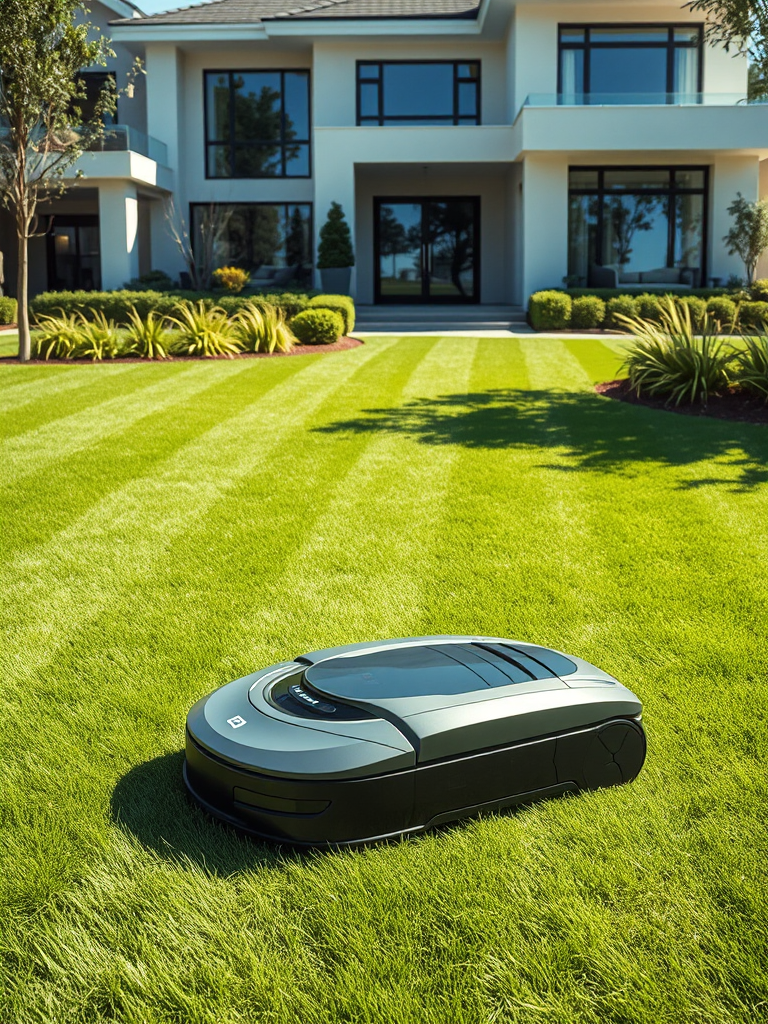
Evaluating the average robotic lawn mower price comparison reveals a very wide financial spread across the current market.
Entry-level models provide basic cutting functions, while premium options offer advanced satellite navigation and rugged wheels.
Budget units such as the LawnMaster OcuMow 16 cost about £300, which translates to roughly $380.
The Flymo EasiLife Go 500 is another accessible entry-level unit priced at £689, or approximately $860.
For midsize yards, a GPS-enabled robotic lawn mower offers a major step up in navigation capability.
The WORX Landroid Vision Cloud WR303E sits comfortably in this middle tier, priced around £700.
Finding a cheap robotic lawn mower is easier now, but you must accept some technical compromises.
The Segway Navimow i208 LiDAR costs £1,099, offering a great balance of smart mapping and reliable performance.
Premium systems demand a serious financial commitment but deliver unparalleled performance on large properties.
The Husqvarna Automower 410iQ EPOS sells for roughly $3,000, bringing high-end commercial tech to residential yards.
The massive Husqvarna Automower 450XH EPOS is a heavy-duty system that carries a retail price of $5,900.
Investing in a high-end robotic lawn mower makes sense if you have highly complex landscaping.
For commercial spaces or massive estates, the top-tier Husqvarna 550 EPOS can easily exceed $13,000.
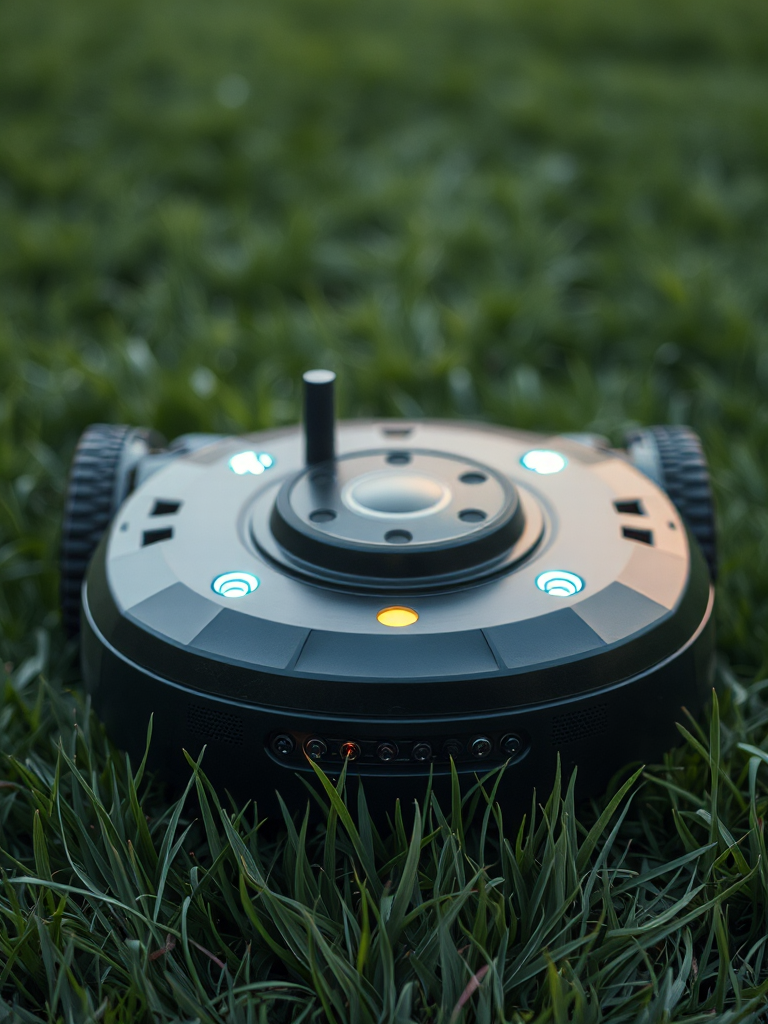
These wire-based models can also get confused by iron grates or buried power lines near your property.
If you prefer a smarter home, you can link your charger to an AI climate control system to coordinate power use.
Ultimately, your budget dictates how much manual setup labor you must perform yourself.
The Wire-Free Revolution: Exploring Boundary-Wire Free Mowers
The traditional chore of burying boundary wires is rapidly becoming a relic of the past.
The transition to a robotic lawn mower without wires utilizes advanced global positioning systems to find its way.
These advanced machines use RTK GPS to map your yard down to the exact centimeter.
According to comprehensive industry tests, these wire-free systems drastically reduce initial installation frustration.
The only truly boundary-wire-free options currently are the Husqvarna Automower 450XH EPOS, 410iQ EPOS and newer models from Kress (Mission RTK KR173/KR174) and Segway (i110/i105).
These high-tech units rely on satellite positioning, RTK correction, or LiDAR-camera fusion to map lawns without buried wire.
For deep insight into these satellite navigation standards, you can read the technical breakdowns on Wired.
These advanced sensors allow your GPS lawn mower to navigate complex lawn shapes flawlessly.
Every modern robotic lawn mower must conform to strict safety standards to prevent accidents.
For detailed consumer safety evaluations and product ratings, consult the guides on TechRadar.
They regularly test how these optical sensors react to sudden obstacles like pets.
These navigation technologies require a completely unobstructed view of the sky to maintain their signal.
Dense tree canopies or tall brick walls can easily block the satellite signal entirely.
For practical home automation advice and integration tips, check out the resources on CNET.
This makes your robotic lawn mower completely independent of physical yard boundaries.
If your yard has heavy tree cover, a hybrid model with optical backup cameras is highly recommended.
Brand Showdown: Husqvarna Automower and Its Top Competitors
Comparing a robotic lawn mower from Husqvarna against the competition reveals distinct design philosophies.
Husqvarna focuses heavily on rugged mechanical durability and professional-grade cutting performance.
Their premium models glide over rough terrain with minimal physical wear and tear.
However, newer competitors are rapidly closing the gap with highly intuitive software features.
The Segway Navimow i Series has taken the market by storm with its incredibly polished app interface.
In head-to-head tests the Automower line consistently scores high on durability and cut quality.
But competitors like the Segway Navimow i Series and the Anthbot Genie 3000 often lead in ease of use and app control.
Furthermore, the Kress Mission RTK series and Robomow RK4000 offer comparable navigation precision with RTK or GPS at lower price points.
The Kress Mission RTK models are especially adept at handling narrow passages without losing their position.
If you have a simple, flat lawn, a cheaper competitor might serve you just as well.
However, if your yard features steep slopes and complex garden beds, Husqvarna remains the gold standard.
Choosing the right robotic lawn mower for complex slopes requires checking the wheel tread design carefully.
Some budget competitors tend to slide and damage the turf when the grass is damp.
Smart Features That Matter: GPS, Self-Charging, and App Control
Smart capabilities turn a simple grass cutter into a truly set-and-forget home appliance.
Managing your robotic lawn mower via Bluetooth or cellular data allows you to adjust cutting heights instantly.
You can easily create temporary stay-out zones around seasonal flower beds or muddy patches.
GPS-based mowers such as the WORX Landroid Vision Cloud, Segway Navimow i390, and the newer Husqvarna EPOS units receive high marks for precise zone creation, adaptive mowing patterns and reliable return-to-dock.
These advanced machines can automatically map out the most efficient path across your lawn.
This systematic approach saves significant battery power compared to random bouncing methods.
The convenience of a self-charging robot mower cannot be overstated.
Self-charging features now standard on most units include automatic docking to a weather-sealed charging station.
They also feature intelligent battery-management that pauses mowing to top up when the charge falls below a threshold.
In some premium models like the Segway Navimow i Series, optional solar-assist panels extend runtime and reduce grid dependence.
Always keep your robotic lawn mower updated with the latest manufacturer firmware.
These digital updates frequently resolve minor navigation bugs and improve overall battery efficiency.
Troubleshooting Common Robotic Mower Problems
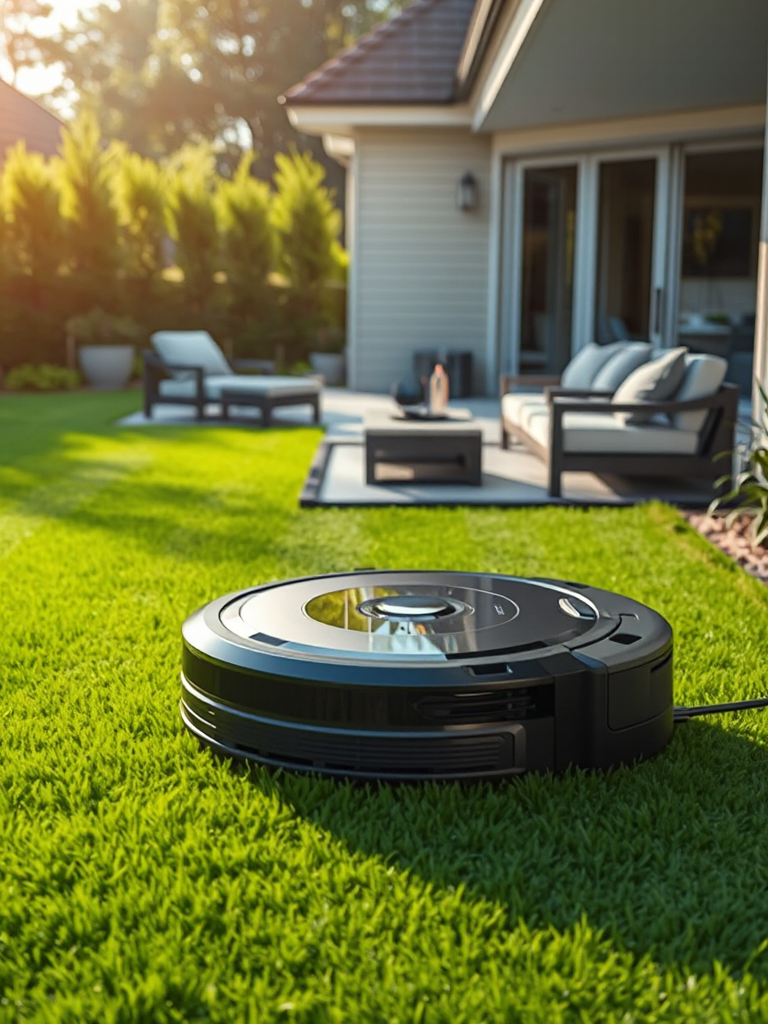
Owning an automated mower is not entirely free of occasional technical hiccups.
Analyzing typical robotic lawn mower problems solutions reveals that most issues stem from poor initial setup.
Boundary wires can easily be cut by garden shears or burrowing yard animals.
Common problems include boundary-wire breaks or interference, sensor obstruction by leaves or debris, insufficient battery life on steep or large yards, and GPS signal loss under heavy canopy.
Thankfully, resolving these common issues is usually a straightforward process.
Highly reliable solutions include using specialized wire inspection and repair kits that feature professional-grade waterproof connectors to easily restore signal integrity, keeping optical sensors clean, selecting models with higher-capacity batteries or 4WD for hills, and using GPS-augmented mowers that can fall back to perimeter-wire mode when satellite reception drops.
If your robotic lawn mower stops working, check the optical lenses for dirt or grass buildup first.
A simple wipe with a microfiber cloth removes fine dust and static particles from the lenses, which instantly resolves common sensor-related docking and navigation failures.
For satellite-guided models, ensuring the reference antenna has a clear sky view is absolutely critical.
Even minor tree growth over the summer can block a signal that worked perfectly in the spring.
Top Picks for 2025/2026: The Best Robotic Mowers for Every Need
Selecting the best robotic lawn mower 2026 has to offer depends on your specific yard layout.
Different yards require different navigation sensors, battery capacities, and physical chassis designs.
For 2025 the consensus among reviewers is that the Husqvarna Automower 450XH EPOS (or the newer 410iQ EPOS) and the Segway Navimow i Series represent the best overall choices, balancing large-area capability, mulching performance and smart-phone integration, while the budget-friendly OcuMow AMB 16-400 remains the top value.
If you want a dependable cordless robotic mower without a massive price tag, look at the mid-range Segway options.
They offer premium GPS tracking without requiring you to bury physical wires.
Below is a quick comparison of the top-performing models currently available on the market.
| Model Name | Navigation Type | Max Lawn Size | Key Advantage |
|---|---|---|---|
| Husqvarna Automower 450XH EPOS | RTK Satellite | Up to 2.5 Acres | Industrial durability |
| Segway Navimow i208 LiDAR | GPS & LiDAR | 800 m² | Superb app & setup |
| WORX Landroid Vision WR303E | Camera & Sensors | 300 m² | No wire setup needed |
| LawnMaster OcuMow 16 | Optical Sensors | 150 m² | Highly affordable |
This is the best robotic lawn mower 2025 users praised for its incredible reliability over long seasons.
Ensure you select a model that matches your yard’s specific slope rating to avoid slippage.
Practical Verdict & Buying Advice
Purchasing a robotic lawn mower comes down to balancing your budget against your tolerance for setup labor.
If you hate troubleshooting technology, a traditional wired model remains the most bulletproof choice.
However, if you want a modern, flexible yard layout, investing in a wire-free GPS system is absolutely worth it.
Homeowners with small, flat, fenced yards can easily get by with a budget-friendly option.
Avoid buying overly complex commercial models unless your property genuinely demands heavy-duty slope management.
Take back your Saturdays and let a smart robotic lawn mower do the hard work for you this season!
Frequently Asked Questions
How long do the cutting blades last on a robotic lawn mower?
Under normal cutting conditions, your robotic lawn mower blades will need to be replaced every two to three months. High-grade steel replacement blades ensure clean, razor-sharp cuts that prevent your lawn tips from fraying, tearing, or turning brown.
Can a robotic mower work safely in heavy rain?
Most modern units can physically operate in the rain, but many have built-in rain sensors that send them back to the charger. Cutting wet grass can cause clogs and uneven mulching results.
Is a robotic lawn mower difficult to winterize?
No, maintaining a robotic lawn mower is simple; just clean the chassis thoroughly, cover it to block dust, and store the unit in a dry, frost-free garage. A protective storage cover will keep moisture and insects from nesting inside the delicate electronics. Keep the battery partially charged over the winter months.
How do these mowers prevent theft from an open front yard?
Most smart mowers feature built-in PIN codes, loud alarm sirens, and GPS tracking. If someone lifts the machine, it immediately locks down and alerts your smartphone.
Can a robotic lawn mower handle steep hills and slopes?
Yes, a quality robotic lawn mower can handle slopes ranging from 15 to over 30 degrees depending on the model. Look for all-wheel-drive units if your yard has severe, slippery inclines.